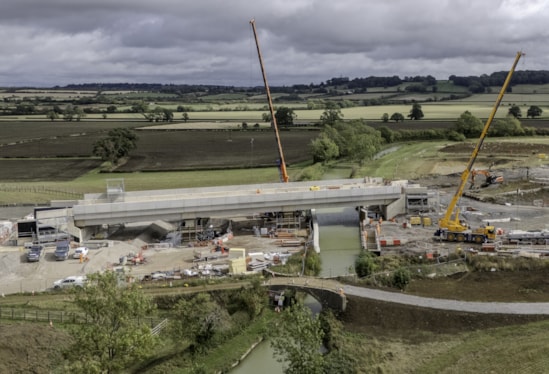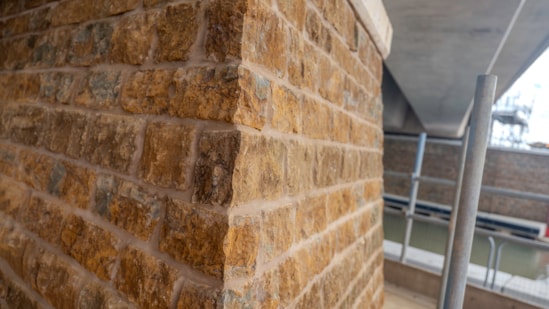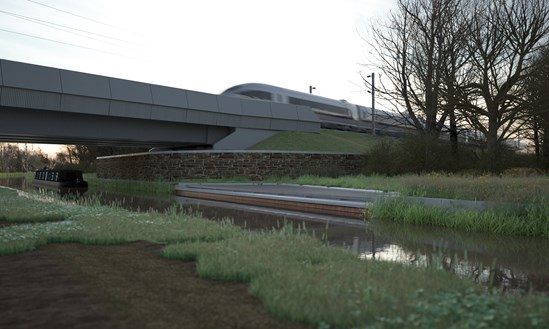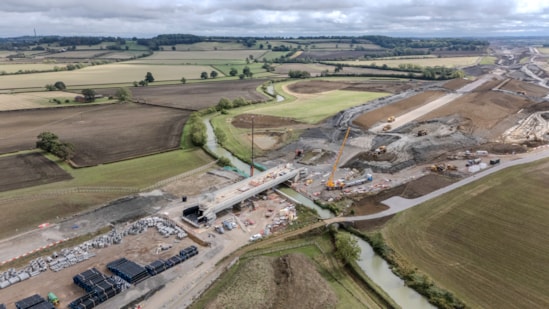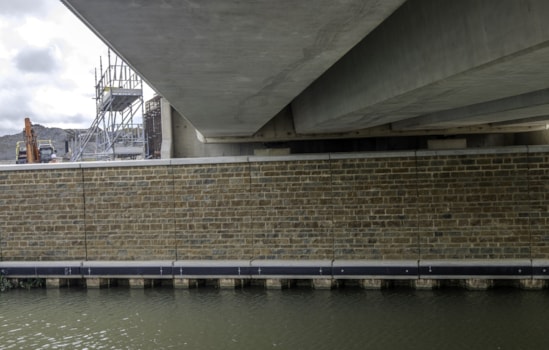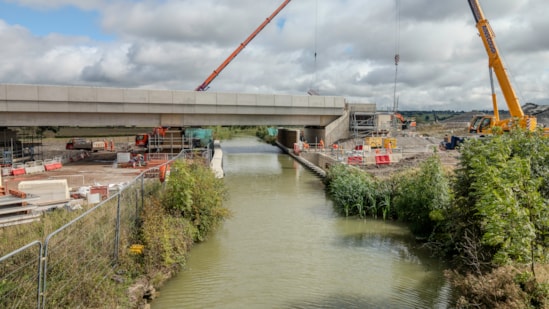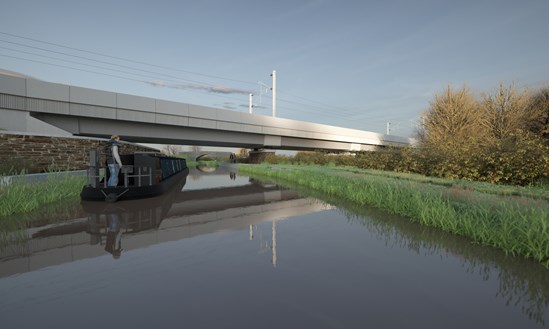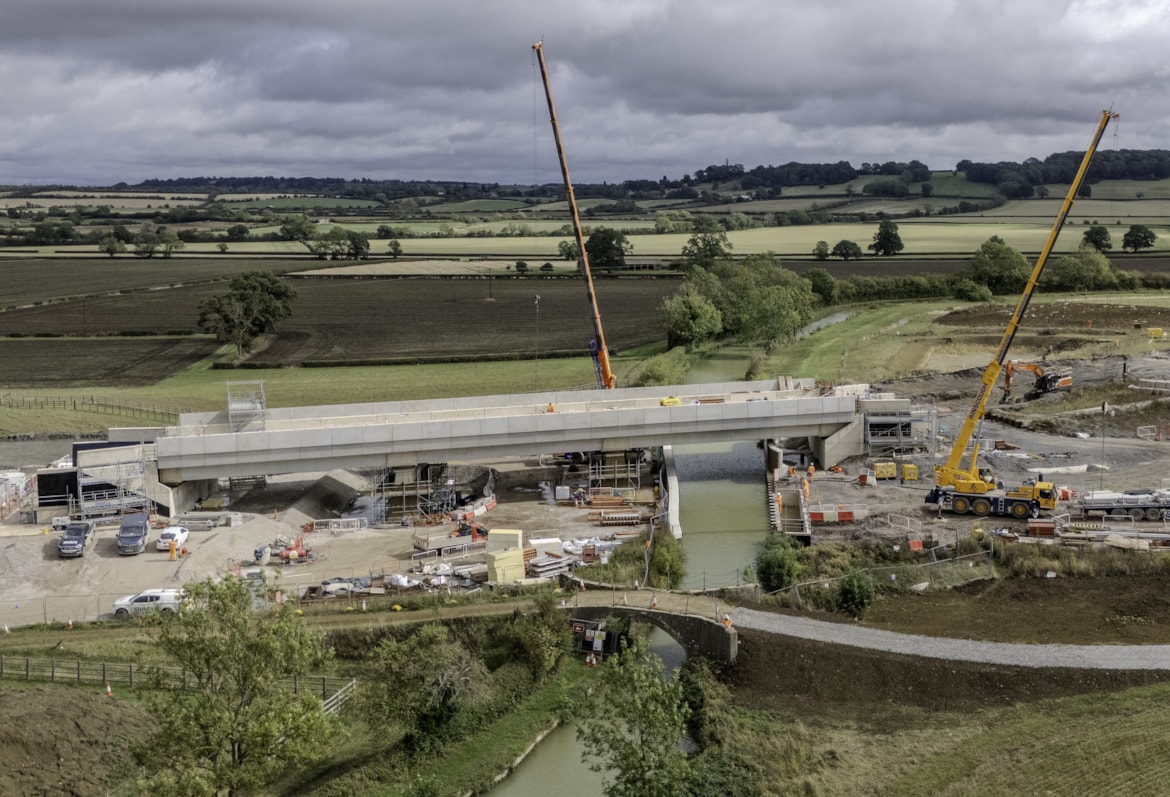
Ancient and modern building materials came together this week as bricklayers working on the HS2 project put the finishing touches to the ‘ironstone’ cladding that will become the signature feature of the unique Oxford Canal viaduct.
Tough and hardwearing, the warm-brown stone been a feature of local buildings for hundreds of years – including the nearby Church of St Peter in Wormleighton - and gets its name from the small quantities of iron ore contained within it.
Now it’s being used to clad key parts of the bridge which will carry state-of-the-art high-speed trains over the historic waterway, as a nod to the canal’s architectural heritage.
Set low in the landscape, the viaduct’s three reinforced concrete spans will carry the new railway 62.5m across the canal, towpath and a country lane near the village of Wormleighton on the edge of Warwickshire and west Northamptonshire.
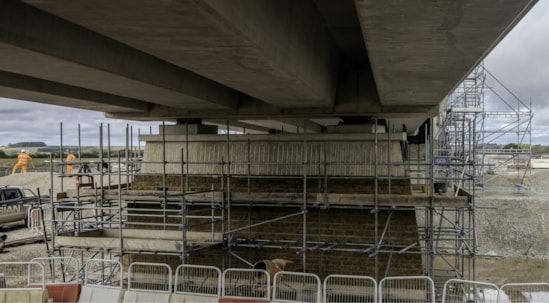
With the structure itself edging towards completion, focus has turned to the cladding that will surround the piers and abutment facing onto the towpath.


As part of the design process, local residents were given a choice of smooth concrete finish or a rough-cut masonry finish for the viaduct piers with the majority oping for ironstone, which was sourced locally.
Alongside the canal, the stone cladding was laid by hand in sections which were then lifted into position, to avoid unnecessary closures to the waterway. For the piers, a team of expert bricklayers spend 4 weeks laying around 2000 individual blocks around the concrete core of the two piers, cutting many to shape to fit the geometry of the piers.
HS2 Ltd’s Senior Project Manager, Sam Arrowsmith said:
“More than two hundred years ago, the first canals revolutionised transportation and helped to build the country we live in today so it’s fitting that our contemporary design includes a nod back to those eighteenth-century pioneers.”
“Once complete, HS2 will transform journeys across the UK, provide more capacity on the existing rail network and help to boost the economy. But it’s also important that key structures like the Oxford Canal viaduct are sensitive to their location, which is why we’ve opted for the ironstone finish.”
As well as using local stone, the viaduct has been designed to be as open as possible to improve the environment for boaters and walkers, allowing views across the landscape and the horizon. The design combines a simple overall form with a special focus on materials for the parts of the structure that are close to the canal and its visitors.
The Oxford Canal viaduct is one of 15 viaducts and bridges being built by HS2’s main works contractor EKFB - a team made up of Eiffage, Kier, Ferrovial and Bam Nuttall - working with specialist architects Moxon and design partners ASC – a team made up of Arcadis, Setec and Cowi.


EKFB’s Project Director, Alexei Bond, said:
“The installation of the ironstone cladding marks a significant milestone for the Oxford Canal viaduct, giving the structure its distinctive character which reflect the heritage of the canal corridor. As the project progresses, our focus is now on completing the embankments, landscaping and environmental works that will help the viaduct settle naturally into the surrounding landscape.
“The feedback from our local communities has been central to our approach from the outset. As part of our commitment to being a good neighbour, the ironstone cladding used on the viaduct's piers was chosen through community engagement, allowing local people to help influence the structure's final appearance and ensuring it complements the character of the surrounding area."
Throughout the design and construction process, HS2 has worked closely with the Canal and River Trust to keep the number of closures to a minimum and boaters informed about any disruption. No water was taken from the canal network during the works and the temporary bridge, which had been installed to link construction sites on either side of the canal has now been removed.
With the viaduct now approaching completion, separate team are preparing to start work on the embankments on either side of the viaduct, landscaping, installation of the track drainage, fencing and reinstatement of the towpath which is currently diverted around the work site.
HS2 are also working with the Trust on a plan to restore an old bridge which carries a farm track and footpath across the canal next to the viaduct.
Opened in stages between 1774 and 1790, the 75-mile-long Oxford Canal is one of the oldest in Britain and was designed to bring coal from the Coventry coalfields to Oxford and the River Thames. Leisure use replaced freight in the years after the second world war, and it is now one of the most popular stretches of the canal network.